
Search Our List Of Towing & Hauling Brands
Green Bay, WI: (920) 339-5262 | Greenville, WI: (920) 757-0680 | Menasha, WI: (920) 734-4272 | Oshkosh, WI: (920) 231-7763 | Schofield, WI: (715) 359-9993
Ball Height
The recommended height of the ball by the trailer manufacturer after the trailer coupler is attached to the towing vehicle (under load).
Ball Mount Shank
The part of the ball mount that is the square shaft that goes into the trailer hitch receiver tube.

Brake Control
Also known as a brake controller, it is the device that acts as an interface between the electric trailer brakes and the towing vehicle. The brake control can be either time-based or inertia-based and is commonly mounted near the towing vehicle's steering wheel. A brake control is necessary with the use of electric trailer brakes.
Coupler
This is part of the trailer that goes over the ball to attach the trailer to the towing vehicle.
Curb Weight
This is the weight of just the vehicle with all fluids (such as fuel) and factory equipment. Any person(s) and equipment packed in/on the vehicle (such as luggage) are not included in figuring this weight.
Electrical Adapter
Also known as a trailer electrical adapter, is a device that adapts the socket on the towing vehicle to the plug on the trailer. The adapter is always classified by the connection from the towing vehicle to the trailer and NOT from the trailer to the towing vehicle.
Electric Brakes
Assists the towing vehicle in slowing down the trailer through the use of a connection between the brake control and the towing vehicle's wiring system. It is a type of trailer brakes that uses electrical signals to help accent disc or drum brakes.
Equalizer
See Weight Distribution Hitch
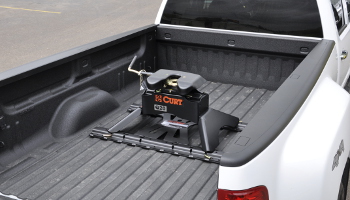
Fifth-Wheel Hitch
Fifth-wheel hitches are placed in the bed of a truck over the rear axle. They use a king pin to attach the towing vehicle and trailer.
Fifth-wheel hitches do not have classes of hitches. Instead fifth-wheel hitches are rated by their maximum weight.
Fifth-Wheel Trailer
Fifth-wheel trailers allow for tighter turning when compared to bumper mounted hitches.

Gooseneck Hitch
The gooseneck hitch is mounted in the bed of the truck between two and six inches in front of the rear axle. It is utilized when a larger ball that what a bumper mount hitch needs to be used.
Gooseneck hitches do not have classes of hitches. Instead gooseneck hitches are rated by their maximum weight.

Gooseneck Trailer
A gooseneck trailer pivots on a coupler mounted in a truck bed. This allows for a better turning radius than what bumper mounted hitches allow.

Gross Combination Weight (GCW)
GCW is the actual weight of to towing vehicle, trailer and everything else that is being hauled. That would include people, fuel, luggage etc.
Gross Combination Weight Rating (GCWR)
The GCWR is the manufacturer's specific rating for the towing vehicle. It is not the actual weight (which is GCW).
Gross Axle Weight (GAW)
The actual weight being applied to the axle.
Gross Axle Weight Rating (GAWR)
The theoretical maximum weight the axle can handle safety.
Gross Trailer Weight (GTW)
The actual amount of weight of the trailer with all luggage/cargo included.
Gross Trailer Weight Rating (GTWR)
The maximum recommended weight of the trailer with luggage/cargo included given by the trailer manufacturer.
Gross Vehicle Weight (GVW)
GVW is the actual amount of weight of a vehicle with all passengers, luggage, fuel, fluids etc. included.
Gross Vehicle Weight Rating (GVWR)
The maximum weight the vehicle can handle safely given by the vehicle manufacturer.
Hitch Ball
The ball that the coupler on the trailer attaches to on the towing vehicle. Three common sizes are 1-7/8", 2" and 2-5/16".
Hitch Classes
Hitch classes are broken down into five different classes and based on the trailer size. The higher the class of hitch, the higher the weight capacity of that hitch. For safety reasons, DO NOT EXCEED the towing vehicle's towing capacity.
Class I
Rated up to 2,000 lbs
Class II
Rated up to 3,500 lbs
Class III
Rated up to 5,000 lbs
Class IV
Rated up to 7,500 lbs. Up to 10,000 lbs with the use of a weight distribution hitch.
Class V
Rated up to 12,000 lbs. Up to 17,000 lbs with the use of a weight distribution hitch.
Hitch Receiver
The receptacle part of the trailer hitch that ball mounts, draw bars and other inserts. Common sizes are 1-1/4" and 2".
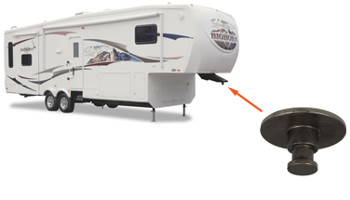
King Pin
Used as the attaching piece for a fifth-wheel trailer. It is on the trailer and fifth-wheel hitch holds the king pin.
King Pin Weight
The weight of trailer being exerted on the pin. Typically 25% of the GTW (gross trailer weight).
Locking Pin
A locking hitch pin that will prevent the theft a ball mount or any other insert.
Pin
Helps fasten inserts into the receiver hitch.
Pintle Hook
The jaw portion of the pintle hitch that attaches to the towing vehicle.

Pintle Hitch
A coupling mechanism with a trailer side lunette eye and vehicle side pintle hook. Common uses for construction, industrial, military and agriculture use.

Pintle Mount
A receiver hitch insert that has a flat plate to provide a mounting platform for the pintle hook.

Payload
The weight of the load being transported not including the weight of the towing vehicle and trailer.
Receiver Adapter
Also known as a hitch adapter, this adapter helps adapt a trailer hitch to a different size to fit a different shank size. Use of this adapter may reduce the trailer hitch weight capacity.

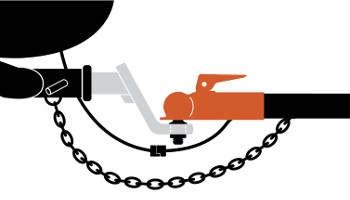
Safety Chains
Safety chains are an important safety precaution. They connect the trailer and towing vehicle and come in use if the trailer and towing vehicle break away from each other.

Tandem Axle
A tandem axle trailer consists of two axles (four tires).
Tongue
The trailer part that extends forward which the coupler attaches to to allow the trailer to attach to the towing vehicle.

Towing Capacity
This is the amount of weight a vehicle can tow safely. Calculate towing capacity by subtracting the Gross Vehicle Weight from the Gross Combination Weight Rating.
GCWR - GVW = Towing Capacity
Tow Rating
The maximum weight a vehicle can tow given by the vehicle manufacturer.
Trailer Ball Shank
Also known as ball shank, is the threaded part of the trailer ball that gets inserted in a ball platform. It's secured down by tightening down a washer and nut.

Trailer Tongue Weight
Also known as Tongue Weight, is the amount of weight being applied to the towing vehicle from the trailer. Tongue weight is typically 10% of the GTW (gross trailer weight).

V-5
The testing/rating system of trailer hitches that's been established by the Trailer Hitch Manufacturer's Association.
Weight Carrying
A towing method where the total amount of the trailer's tongue weight is put directly on the trailer hitch and the rear of the towing vehicle.

Weight Carrying Capacity (WC)
The amount of weight that a specific trailer hitch can tow safely without the use of a weight distribution hitch.
Weight Carrying Hitch
A hitch used without the use of a weight distribution system so the hitch supports the trailer's tongue weight. It may be limited to certain weight carrying capabilities. The hitch may be rated to allow for it to be used with a weight distribution hitch.
Weight Distribution
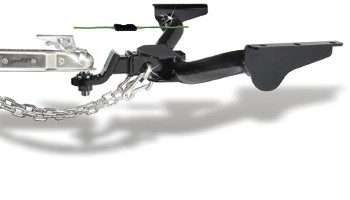
The use of a weight distribution hitch to distribute a part of the trailer's tongue weight across the axles of the trailer and towing vehicle. This allows the towing vehicle and trailer to travel more level and to help maximize the hitch's gross trailer weight capacity.

Weight Distribution Capacity (WD)
The amount of weight a hitch can safely tow with the use of a weight distribution hitch.
Weight Distribution Hitch
Also known as load-leveling or load-equalizing, a hitch attachment that uses metal bars (spring bars) under tension that's used to disperse the trailer's tongue weight across the axles of the trailer and towing vehicle. The use of this hitch can increase braking, handling and towing capacity.

Search Our List Of Towing & Hauling Brands
Green Bay, WI: (920) 339-5262 | Greenville, WI: (920) 757-0680 | Menasha, WI: (920) 734-4272 | Oshkosh, WI: (920) 231-7763 | Schofield, WI: (715) 359-9993
Ball Height
The recommended height of the ball by the trailer manufacturer after the trailer coupler is attached to the towing vehicle (under load).
Ball Mount Shank
The part of the ball mount that is the square shaft that goes into the trailer hitch receiver tube.
Brake Control
Also known as a brake controller, it is the device that acts as an interface between the electric trailer brakes and the towing vehicle. The brake control can be either time-based or inertia-based and is commonly mounted near the towing vehicle's steering wheel. A brake control is necessary with the use of electric trailer brakes.
Coupler
This is part of the trailer that goes over the ball to attach the trailer to the towing vehicle.
Curb Weight
This is the weight of just the vehicle with all fluids (such as fuel) and factory equipment. Any person(s) and equipment packed in/on the vehicle (such as luggage) are not included in figuring this weight.
Electrical Adapter
Also known as a trailer electrical adapter, is a device that adapts the socket on the towing vehicle to the plug on the trailer. The adapter is always classified by the connection from the towing vehicle to the trailer and NOT from the trailer to the towing vehicle.
Electric Brakes
Assists the towing vehicle in slowing down the trailer through the use of a connection between the brake control and the towing vehicle's wiring system. It is a type of trailer brakes that uses electrical signals to help accent disc or drum brakes.
Equalizer
See Weight Distribution Hitch
Fifth-Wheel Hitch
Fifth-wheel hitches are placed in the bed of a truck over the rear axle. They use a king pin to attach the towing vehicle and trailer.
Fifth-wheel hitches do not have classes of hitches. Instead fifth-wheel hitches are rated by their maximum weight.
Fifth-Wheel Trailer
Fifth-wheel trailers allow for tighter turning when compared to bumper mounted hitches.
Gooseneck Hitch
The gooseneck hitch is mounted in the bed of the truck between two and six inches in front of the rear axle. It is utilized when a larger ball that what a bumper mount hitch needs to be used.
Gooseneck hitches do not have classes of hitches. Instead gooseneck hitches are rated by their maximum weight.
Gooseneck Trailer
A gooseneck trailer pivots on a coupler mounted in a truck bed. This allows for a better turning radius than what bumper mounted hitches allow.
Gross Combination Weight (GCW)
GCW is the actual weight of to towing vehicle, trailer and everything else that is being hauled. That would include people, fuel, luggage etc.
Gross Combination Weight Rating (GCWR)
The GCWR is the manufacturer's specific rating for the towing vehicle. It is not the actual weight (which is GCW).
Gross Axle Weight (GAW)
The actual weight being applied to the axle.
Gross Axle Weight Rating (GAWR)
The theoretical maximum weight the axle can handle safety.
Gross Trailer Weight (GTW)
The actual amount of weight of the trailer with all luggage/cargo included.
Gross Trailer Weight Rating (GTWR)
The maximum recommended weight of the trailer with luggage/cargo included given by the trailer manufacturer.
Gross Vehicle Weight (GVW)
GVW is the actual amount of weight of a vehicle with all passengers, luggage, fuel, fluids etc. included.
Gross Vehicle Weight Rating (GVWR)
The maximum weight the vehicle can handle safely given by the vehicle manufacturer.
Hitch Ball
The ball that the coupler on the trailer attaches to on the towing vehicle. Three common sizes are 1-7/8", 2" and 2-5/16".
Hitch Classes
Hitch classes are broken down into five different classes and based on the trailer size. The higher the class of hitch, the higher the weight capacity of that hitch. For safety reasons, DO NOT EXCEED the towing vehicle's towing capacity.
Class I
Rated up to 2,000 lbs
Class II
Rated up to 3,500 lbs
Class III
Rated up to 5,000 lbs
Class IV
Rated up to 7,500 lbs. Up to 10,000 lbs with the use of a weight distribution hitch.
Class V
Rated up to 12,000 lbs. Up to 17,000 lbs with the use of a weight distribution hitch.
Hitch Receiver
The receptacle part of the trailer hitch that ball mounts, draw bars and other inserts. Common sizes are 1-1/4" and 2".
King Pin
Used as the attaching piece for a fifth-wheel trailer. It is on the trailer and fifth-wheel hitch holds the king pin.
King Pin Weight
The weight of trailer being exerted on the pin. Typically 25% of the GTW (gross trailer weight).
Locking Pin
A locking hitch pin that will prevent the theft a ball mount or any other insert.
Pin
Helps fasten inserts into the receiver hitch.
Pintle Hook
The jaw portion of the pintle hitch that attaches to the towing vehicle.
Pintle Hitch
A coupling mechanism with a trailer side lunette eye and vehicle side pintle hook. Common uses for construction, industrial, military and agriculture use.
Pintle Mount
A receiver hitch insert that has a flat plate to provide a mounting platform for the pintle hook.
Payload
The weight of the load being transported not including the weight of the towing vehicle and trailer.
Receiver Adapter
Also known as a hitch adapter, this adapter helps adapt a trailer hitch to a different size to fit a different shank size. Use of this adapter may reduce the trailer hitch weight capacity.
Safety Chains
Safety chains are an important safety precaution. They connect the trailer and towing vehicle and come in use if the trailer and towing vehicle break away from each other.
Tandem Axle
A tandem axle trailer consists of two axles (four tires).
Tongue
The trailer part that extends forward which the coupler attaches to to allow the trailer to attach to the towing vehicle.
Towing Capacity
This is the amount of weight a vehicle can tow safely. Calculate towing capacity by subtracting the Gross Vehicle Weight from the Gross Combination Weight Rating.
GCWR - GVW = Towing Capacity
Tow Rating
The maximum weight a vehicle can tow given by the vehicle manufacturer.
Trailer Ball Shank
Also known as ball shank, is the threaded part of the trailer ball that gets inserted in a ball platform. It's secured down by tightening down a washer and nut.
Trailer Tongue Weight
Also known as Tongue Weight, is the amount of weight being applied to the towing vehicle from the trailer. Tongue weight is typically 10% of the GTW (gross trailer weight).
V-5
The testing/rating system of trailer hitches that's been established by the Trailer Hitch Manufacturer's Association.
Weight Carrying
A towing method where the total amount of the trailer's tongue weight is put directly on the trailer hitch and the rear of the towing vehicle.
Weight Carrying Capacity (WC)
The amount of weight that a specific trailer hitch can tow safely without the use of a weight distribution hitch.
Weight Carrying Hitch
A hitch used without the use of a weight distribution system so the hitch supports the trailer's tongue weight. It may be limited to certain weight carrying capabilities. The hitch may be rated to allow for it to be used with a weight distribution hitch.
Weight Distribution
The use of a weight distribution hitch to distribute a part of the trailer's tongue weight across the axles of the trailer and towing vehicle. This allows the towing vehicle and trailer to travel more level and to help maximize the hitch's gross trailer weight capacity.
Weight Distribution Capacity (WD)
The amount of weight a hitch can safely tow with the use of a weight distribution hitch.
Weight Distribution Hitch
Also known as load-leveling or load-equalizing, a hitch attachment that uses metal bars (spring bars) under tension that's used to disperse the trailer's tongue weight across the axles of the trailer and towing vehicle. The use of this hitch can increase braking, handling and towing capacity.